Tag Archives: porcelain gallbladder

PUBLISHED: Robotic-Assisted Cholecystectomy for Porcelain Gallbladder and Cholelithiasis

Robotic-Assisted Cholecystectomy for Porcelain Gallbladder and Cholelithiasis
Corbin S. Morris, MD; Ji Ho Park, MD; Charles C. Vining, MD, FACS, FSSO; Lawrence M. Knab, MD, FACS, FSSO; Rushin D. Brahmbhatt, MD, FACS
Penn State Health Milton S. Hershey Medical Center

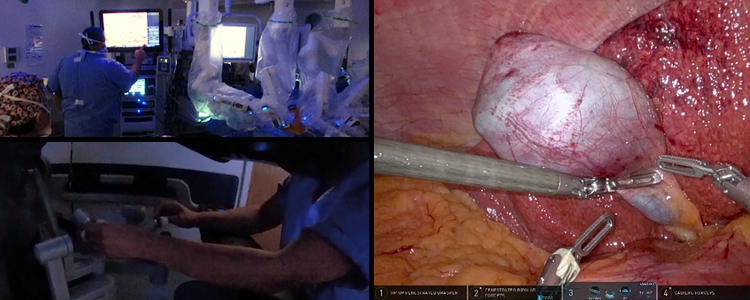
This video demonstrates a successful robotic-assisted cholecystectomy for a patient with a large, mobile gallstone and imaging findings consistent with porcelain gallbladder. Resection of the specimen allowed for prevention of complications secondary to the gallstone and possibly reduced the risk of malignancy. Minimally invasive methods allow for a safe alternative to open cholecystectomy with reduced perioperative morbidity. This video demonstrates how to obtain the critical view of safety as well as how to use Firefly to verify identified anatomy. The specimen was successfully removed, and the patient tolerated the procedure well. The specimen was sent to pathology for evaluation of potential underlying malignancy. This resection method may be utilized for any form of biliary pathology, including symptomatic cholelithiasis and cholecystitis, which are among the most frequent procedures performed by general surgeons.

This publication is an updated version to a previously published article.
PUBLISHED: Robotic Cholecystectomy for Porcelain Gallbladder and a 6.8-cm Stone

Robotic Cholecystectomy for Porcelain Gallbladder and a 6.8-cm Stone
Rushin D. Brahmbhatt, MD
Penn State Health Milton S. Hershey Medical Center

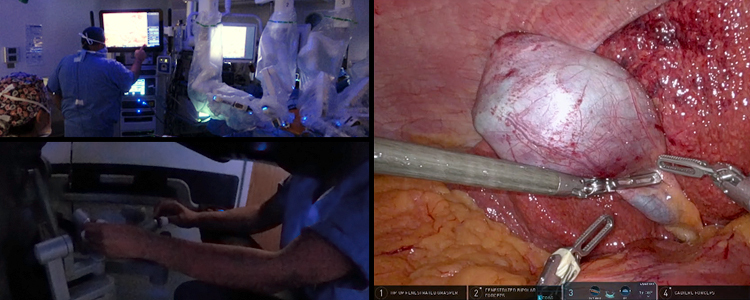
The incidence of porcelain gallbladder is low but carries a potential risk of malignancy. Large gallstones pose technical obstacles for minimally invasive surgical procedures. In this case, a 72-year-old woman undergoes a robotic cholecystectomy because of her porcelain gallbladder and a 6.8-cm gallstone. The surgical procedure involved appropriately addressing two major concerns: obtaining sufficient gallbladder retraction because of the large size of the stone, and the presence of hepatic steatosis. Key modifications included strategic port placement, utilizing stone position for retraction, and early cystic artery division. The procedure finished without any issues. The frozen section analysis results showed benign pathology. The patient recovered from surgery without any complications. Key takeaways are that robotic cholecystectomy can be safely performed for a porcelain gallbladder with large gallstones using appropriate technical modifications, and that flexibility in the operating room is crucial in cases where standard methods become impractical.