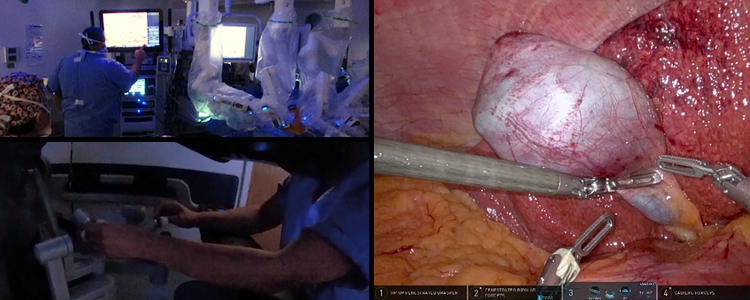
Robotic-Assisted Cholecystectomy for Porcelain Gallbladder and Cholelithiasis
Corbin S. Morris, MD; Ji Ho Park, MD; Charles C. Vining, MD, FACS, FSSO; Lawrence M. Knab, MD, FACS, FSSO; Rushin D. Brahmbhatt, MD, FACS
Penn State Health Milton S. Hershey Medical Center
This video demonstrates a successful robotic-assisted cholecystectomy for a patient with a large, mobile gallstone and imaging findings consistent with porcelain gallbladder. Resection of the specimen allowed for prevention of complications secondary to the gallstone and possibly reduced the risk of malignancy. Minimally invasive methods allow for a safe alternative to open cholecystectomy with reduced perioperative morbidity. This video demonstrates how to obtain the critical view of safety as well as how to use Firefly to verify identified anatomy. The specimen was successfully removed, and the patient tolerated the procedure well. The specimen was sent to pathology for evaluation of potential underlying malignancy. This resection method may be utilized for any form of biliary pathology, including symptomatic cholelithiasis and cholecystitis, which are among the most frequent procedures performed by general surgeons.
This publication is an updated version to a previously published article.
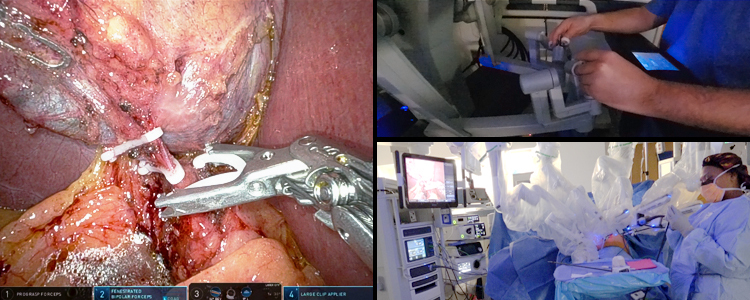
Robotic Cholecystectomy for Recurrent Gallstone Pancreatitis in a Patient with Prior Distal Pancreatectomy and Splenectomy for Acinar Cell Carcinoma
Charles C. Vining, MD, FACS, FSSO; Lawrence M. Knab, MD, FACS, FSSO; Rushin D. Brahmbhatt, MD, FACS
Penn State Health Milton S. Hershey Medical Center
Recurrent gallstone pancreatitis is a common and potentially morbid condition for which definitive cholecystectomy is recommended to prevent recurrent biliary complications and reduce hospital readmissions. Surgical management may be technically challenging in patients with prior pancreatic resection because of altered anatomy, adhesions, and concern for malignancy recurrence. This video demonstrates a robotic-assisted cholecystectomy performed in a 78-year-old man with recurrent gallstone pancreatitis and a history of distal pancreatectomy for pancreatic acinar cell carcinoma. Preoperative imaging demonstrated cholelithiasis without evidence of recurrent malignancy. Diagnostic laparoscopy was performed to exclude occult intra-abdominal disease before proceeding with cholecystectomy. Operative findings included chronic cholecystitis and cholelithiasis. Robotic dissection facilitated meticulous clearance of fibrofatty tissue within the hepatocystic triangle and safe dissection around the cystic structures prior to cystic duct division, consistent with established principles for preventing bile duct injury. The procedure was completed without complication. This case highlights the role of robotic-assisted cholecystectomy in patients with recurrent gallstone pancreatitis and prior pancreatic surgery, where enhanced visualization and instrument dexterity may improve operative safety in complex inflammatory and reoperative settings.
The New Gold Standard for Surgical Videos